

Almonds
-
News
A high input approach to almond growing, ensuring nutrient replacement and also catering to the following season’s crop, is paying dividends for the Australian Farming Services (AFS) property at Kenley in Victoria’s Murray Valley region.
The 730ha ‘Augusta’ property is notching some of the highest yields and crack-out percentages among the AFS farms in the region, including the 1600ha ‘Cadell’ farm at Balranald and 2000ha ‘Canally’ property at Kyalite in NSW’s southern Riverina area.
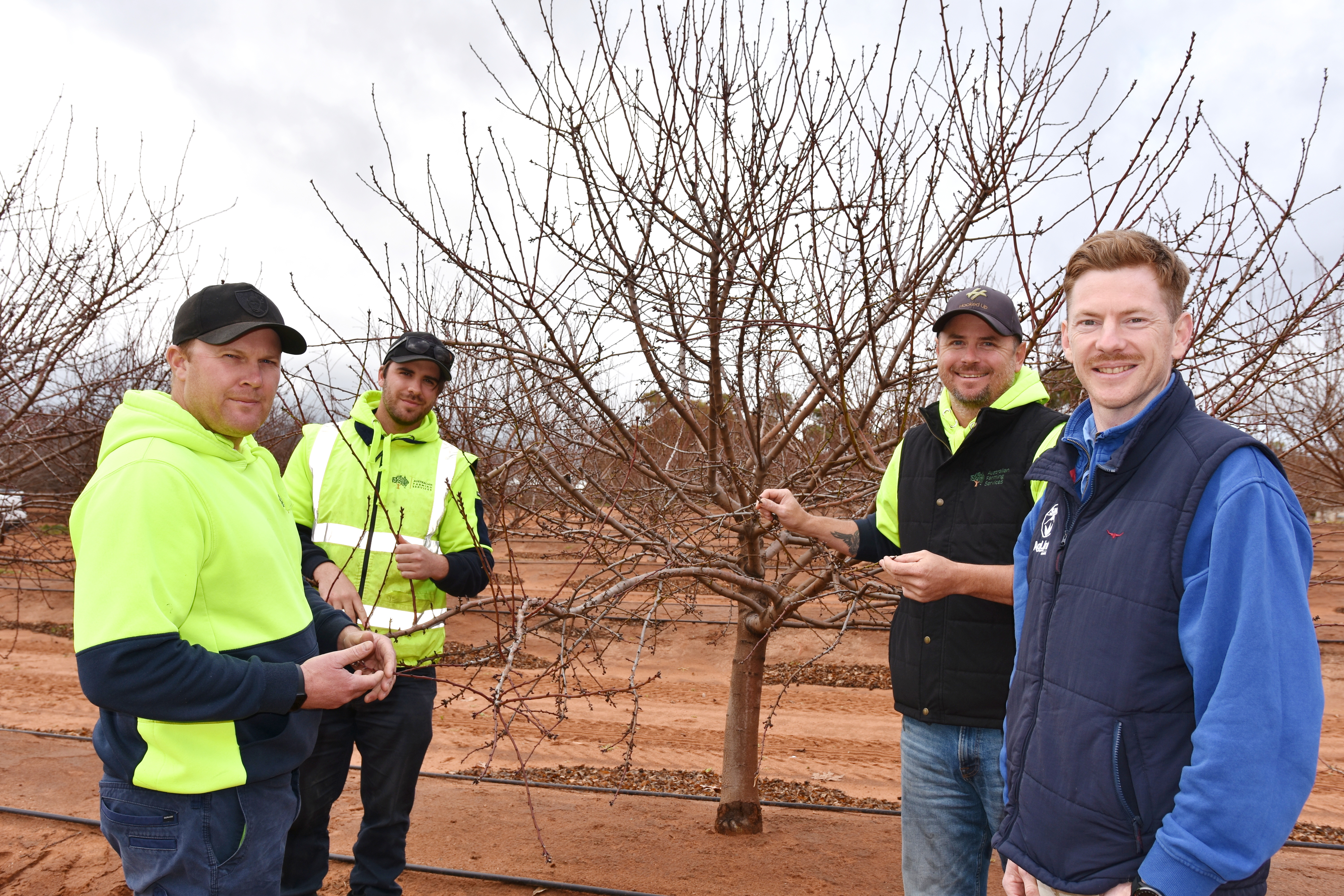
Augusta comprises 50 per cent Nonpareil trees and the remainder is an equal balance of Monterey and Carmel, managed by AFS regional manager Josh Forster and a team including farm manager Kayne McAlpine, operations manager Daniel Scott, irrigation manager Billy Bentley and agronomist Brian Slater.
The former vineyard property, which features a range of soils from sandy loams to heavy clays, has undergone three stage plantings since 2017, recently completed in 2023 on low-lying, heavy country that required some drainage and pumping works.
Augusta’s almond production was previously processed by Select Harvest, but now heads to AFS’ new Murray Downs Almonds facility before largely being shipped to export markets in India and China.
Josh says the team aims to maximise yield on every hectare, which has resulted in fertiliser rates ramping up a little in recent times and incurring higher input costs.
“We were setting up for 3.4 tonnes/ha, whereas now that’s 3.7t/ha and higher,” Josh says.
“To target 3.7t/ha, we know we need to spend X amount of money, plus look at setting up the program for the next year,” he says.
“We are very mindful we don’t want to mine the soils and be left in a negative balance at season end. At today’s market prices, we know the small cost per ha to bring the trees back to a positive position will pay dividends the following season.
“We want to put nutrients back, look at the units we need for what we want to grow, and then also what we need for the next crop. We target a higher portion of our nutrients to be applied post-harvest. We have spreadsheets looking at what nutrients we have taken out and for what we are producing, and we alter accordingly.”
From flowering stage, Billy says various bio-stimulants, such as humates and kelp, are applied and the beds are watered a little. They manage water applications carefully, with an eye also on weather events and rainfall.
Josh says they push the growing season more heavily from October, aiming to enhance lateral growth before pulling the trees back in early November, pushing sap flow backwards to set harder wood which can hold fruiting buds for the following season, while also promoting nut fill.
Water chlorine levels are monitored, and soil probes are used to assist constant adjustments in irrigation, which can be undertaken up to twice a day and with continuous fertiliser applications.
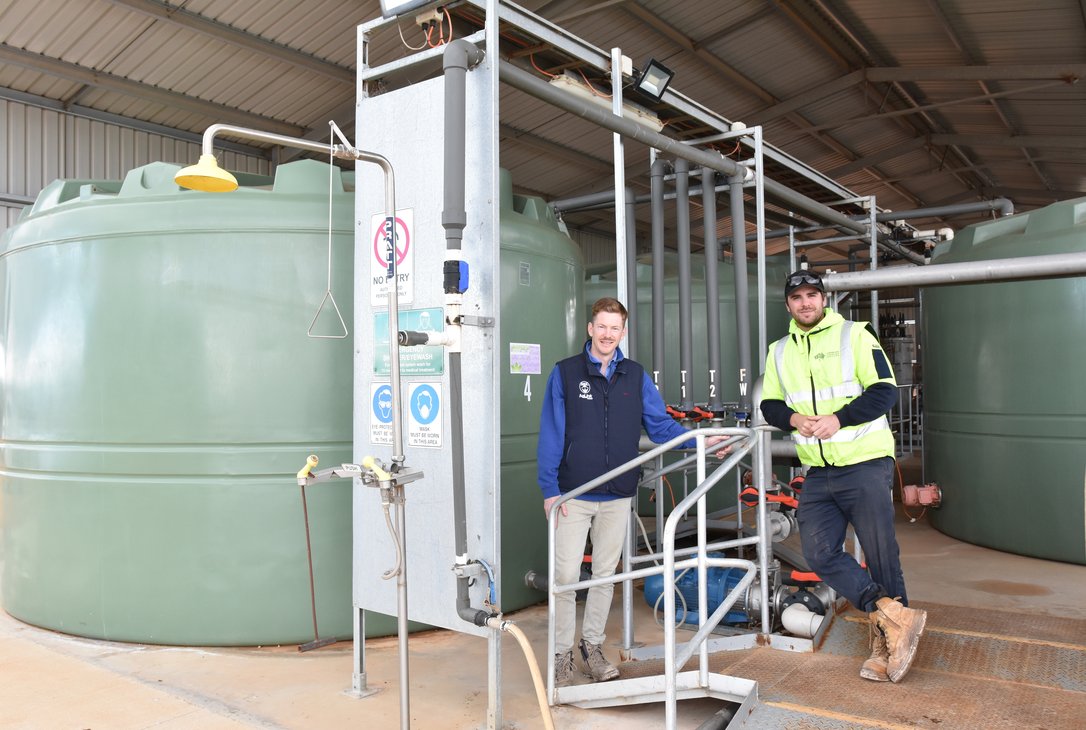
“Billy mixes products for two to three days every week and doses it every day, or at least five to six days of a week,” Josh says.
AFS has developed a strong relationship with Swan Hill Chemicals and its corporate horticultural sales representative, Jake Butler, for numerous input requirements, including water soluble fertilisers, foliar fertilisers and crop protection products, and liquid nutrients via its Aurora brand.
From late October, significant volumes of Haifa’s Multi-K potassium nitrate are applied, preferred for its easy mixing compared with potassium sulphate. Aurora Serious PK 0-5-39 and 0-7-36 liquid mixes also are used up until mid-December.
To correct iron deficiencies at Augusta, three foliar applications were previously applied, however the team has since adopted fertigation of Haifa’s EDDHA iron chelate, which offers 6pc iron and, more importantly, is the most stable in soils, with an ortho-ortho (stability) percentage of 5.2.
Ortho-ortho of 4.8pc has generally been the highest level available in iron chelates, with many chelated products offering levels of 3-4pc. The higher ortho-ortho level ensures more efficient use of the nutrient and improved production and quality, especially in high pH soils.
Josh says the Cadell farm was pushed back about a week on an iron application due to heavy rain and there was a clear visual difference in the property’s trees.
“It’s an important nutrient and if it is lacking, trees will be in poorer health with pale leaves, and they can abort the crop if not addressed.”
Jake says the Haifa iron chelate had become a widely used product throughout the region, with trees showing improved uptake of the nutrient.
Josh says various pesticides also were used mainly to combat a range of bugs and some disease, and of course seasonal conditions impacted nut quality as well, however Augusta was achieving average crack-out of 31pc, just above the ideal target of 30pc.
He says the support of the SHC business and its team to AFS had been invaluable for the company.
“They have a great team to learn from, and we have built strong relationships with Jake and (director) Gary Jeans.”
“We have developed strong trust over time, also outside of work and that then comes into your work. It is very honest between both parties and Jake knows all our team and if there are any issues, we can contact him, and he is out to support us.”
Josh says they will also continue to look at new opportunities for the business.
“There are new self-fertile varieties coming, which can mean you don’t have to operate A and B fertigation systems. We will also look at flyover diagnostic tools coming into the industry for the future.”

