Products and services
Across the tree crop sector, water management is moving steadily up the agenda as packhouses respond to increasing pressure on supply reliability, discharge limits and operating costs.
While much of the focus has traditionally been on wash and packing line efficiency, attention is now shifting toward how water is filtered and recycled within the system itself.
In many citrus, nuts, pipfruit and broader fresh produce operations, seasonal variability in soil load and organic matter continues to present challenges for maintaining consistent wash water quality.
As throughput increases during peak harvest periods, operators are placing greater emphasis on systems that can maintain performance without increasing water consumption or downtime.
This has driven growing interest in multi-stage water treatment approaches, where primary separation is supported by finer filtration steps to improve overall system stability. These finer stages are increasingly used to capture suspended solids that would otherwise remain in recirculated water, contributing to reduced clarity, higher maintenance demand and increased loading on downstream treatment components.
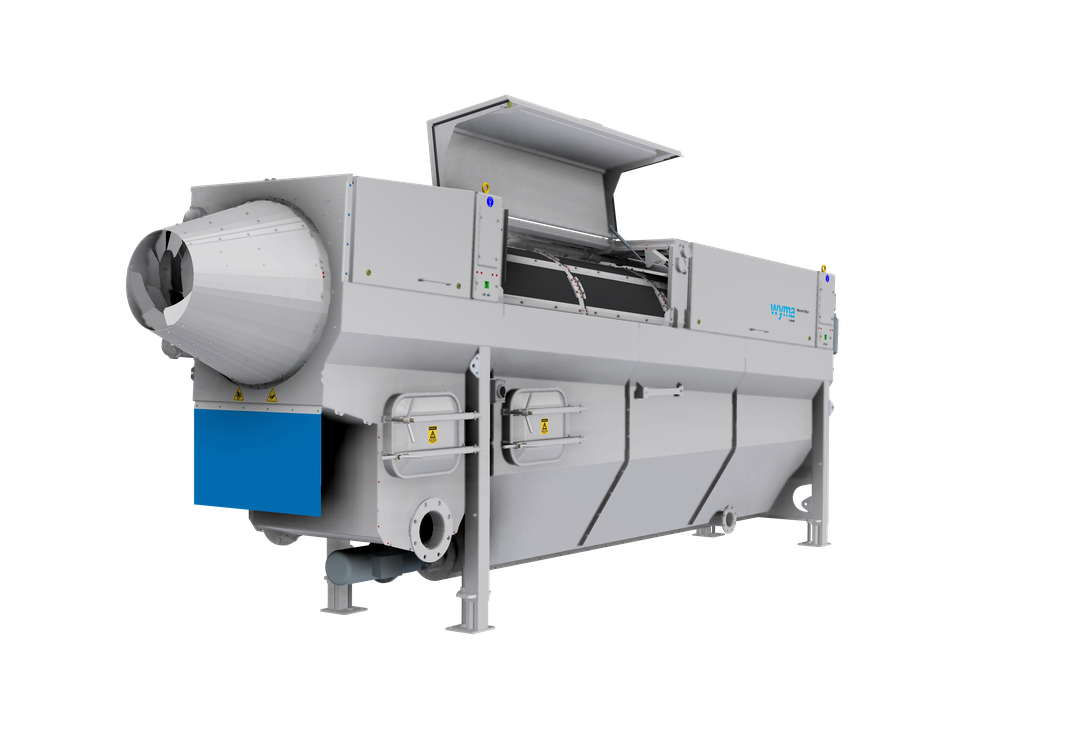
At Hort Connections 2026, Wyma Solutions will be displaying the Micron Filter XL, a micron-level filtration system designed for high-load wash water environments.

The system operates as a second-stage filtration step, typically within the 75–250 micron range depending on application, helping reduce total suspended solids prior to recirculation. As a self-cleaning design, it is intended to maintain continuous throughput without additional fresh water inputs for cleaning cycles, while concentrating captured solids for simplified handling and disposal.
While originally developed in vegetable processing applications, these types of systems are now being considered more broadly across fruit and nut packhouses as part of wider water reuse strategies. The appeal lies in supporting continuous operation while reducing reliance on freshwater inputs and limiting the build-up of organic material within wash circuits.
As the industry continues to adapt to tighter environmental expectations and increasing scrutiny of water consumption, water treatment is becoming less of a standalone utility and more of an integrated part of packhouse design. For many operators, the focus is shifting from simple reuse toward maintaining stable, controlled water systems that can support consistent year-round throughput.
Within this context, finer filtration technologies are expected to play a growing role in enabling more resilient and efficient water management strategies across the tree crop sector.