

Know your pest
Most Tree Crop readers are more interested in moths.
Here are the simple differences between moths and butterflies: moths fly somewhat erratically but butterflies a bit more jerkily than moths.
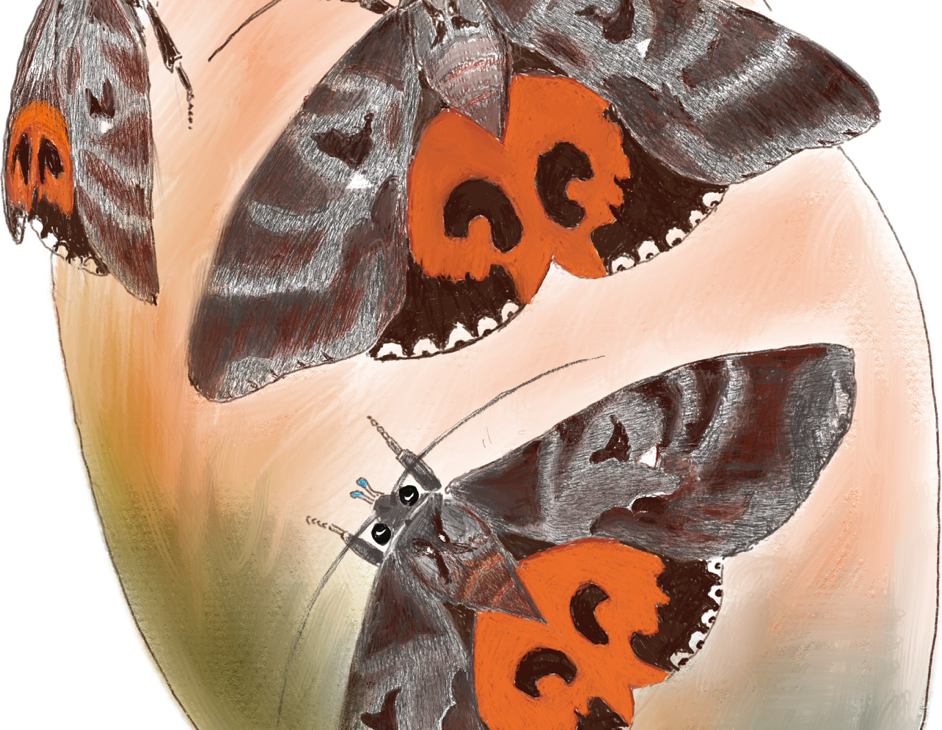
When they land, butterflies open and close their wings vertically above their body. Moths hold their wings like a pitched roof over their abdomen.
Butterflies have a club on the end of their filament antennae; moths may have a long filament-style antenna without a club, but others have feather-like, more complex shapes… but no club.
As for adult mouthparts, you might know of fruit piercing moths which can poke holes into ripening custard apples, mangoes, etc., and feed big-time.
Many butterflies have a coiled-up tube for mouthparts to unroll and suck nectar from deep inside a flower.
The name Lepidoptera: in Latin, lepis means scale, ptera means wings. In fact, these scales are all over the adult bodies as well as the wings and they easily rub off.
Maybe only grasshoppers chew more noisily than caterpillars, the larvae, when they’re eating. And of course, grasshoppers usually turn up in much larger numbers.
The chewing noise is not bad manners… neither have lips to close.
They have two big mandibles, a couple of lesser ‘teeth’ called maxillae, a flap at top and bottom to help funnel the chewed-off bits down into the oesophagus and for good measure, some palps to wave about and ‘taste’ what they are about to bite.
No wonder the crop you are growing for sale is quickly devalued if you let hatching caterpillars go unnoticed for more than a few days.
Caterpillars breathe through a series of spiracles, like portholes, which they can open or close.
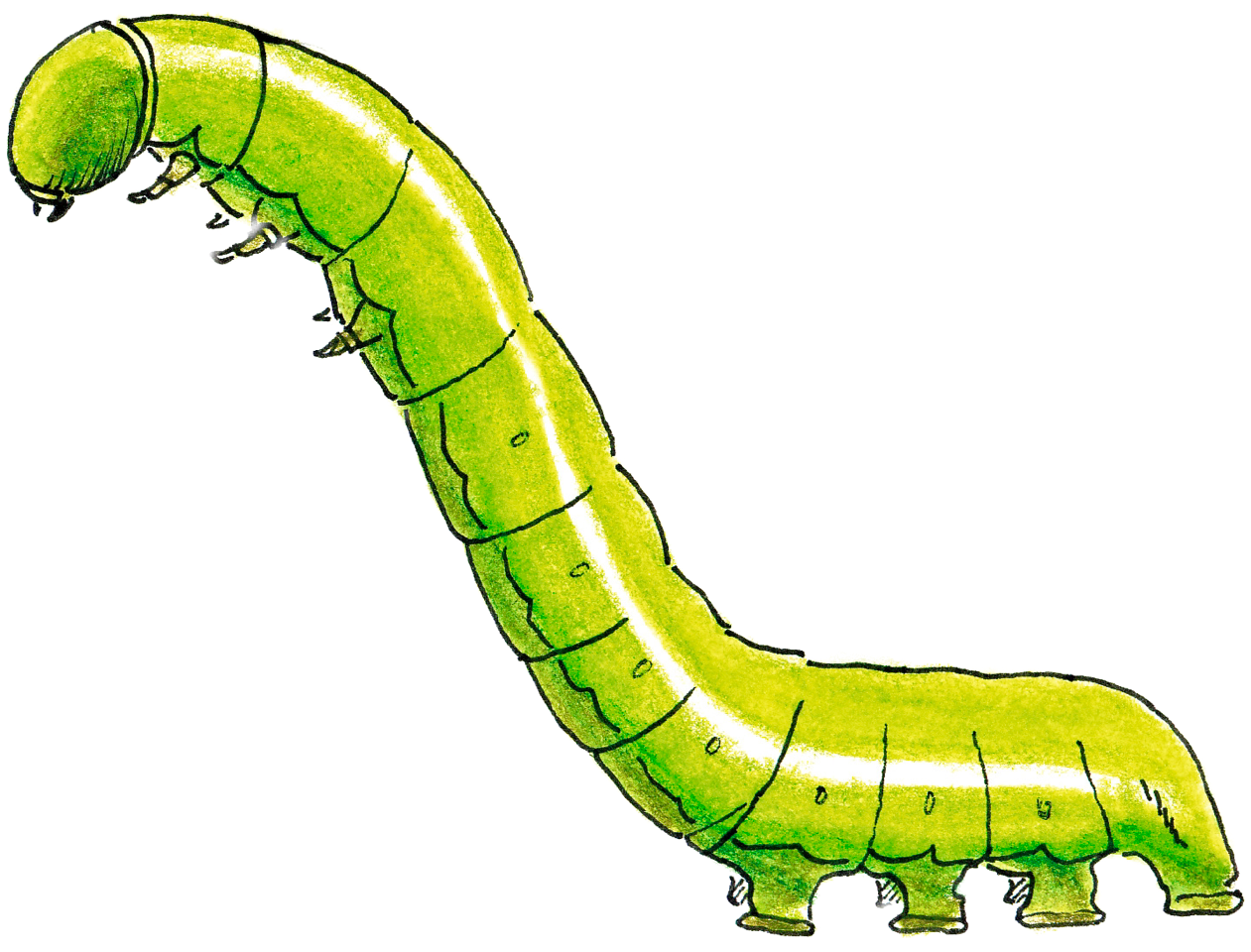
They have a pair of short front legs on each of the first three segments behind the head, and up to five pairs of stumpy pro-legs bringing up the rear.
They generally move along a stem or other surface in an undulating motion.
Loopers are a variant caterpillar, named for the way they crawl; standing on their hindmost legs, they reach as far forward as they can with their head and front legs, get a grip and then bring their backside forward making their body arch (like a loop).
Some people call them ‘inchworms’ because they advance an inch at a time, well, maybe the big ones.
Everywhere caterpillars travel they leave a fine filament of silk (think silkworms).
If you spray them and they bail out, off the plant, they will abseil down on this silk thread. The head has compound eyes, and the body often has spines, bristles, multiple colours, etc., either for camouflage or to deter predators.
The damage is fast and devastating – usually preferring the younger leaves, growing tips, buds, petals, stamens and stigma.
When it is time to enter the pupal stage, the moth caterpillars use their silken skills to build a cocoon around themselves, often part-hidden in the bark crevices.
Butterfly pupae form a chrysalis capsule usually hanging free, like metallic baubles which change colours as they age.
The pupal stage is usually short during the warm weather but, as autumn approaches, both moths and butterfly pupae can extend their ‘hibernation’ until spring warms things up and the cycles begin again.
Some tree crop caterpillar pests are:
Oriental fruit moths mostly attack stone fruits during summer. Eggs are laid on the undersides of leaves and young stems; the hatching caterpillars bore into the young tips which wilt and die causing multiple shoots. Fruit is often attacked later in the season as the caterpillar enters adjacent to the stem and bores down to the stone – where you won’t hear them eating.
Yellow peach moth also attacks custard apples, mangos, pawpaw, even citrus. Like the Oriental moth, above, they become more damaging in summer. This yellow-orange moth is about 15mm long with some black spots on the wings and body, it lays its eggs directly on the fruit and, on hatching, the caterpillar bores inside, grows to about 25mm over the three weeks then emerges to weave its cocoon. Egg to adult is about six weeks in summer.
The macadamia flower caterpillar reduces nut set dramatically in a short space of time because it doesn’t take long or many young caterpillars to destroy a macadamia flower raceme and then move onto other racemes. Half-millimetre white eggs are laid usually at the bud stage between the buds or hiding places in the bracts. The caterpillar stage lasts about 2-3 weeks, pupation is usually off the tree, and the cycle takes about a month (always depending on the temperatures). When macadamias are not flowering, the small grey moths lay eggs on native grevilleas.
It would seem macadamia nut borers were programmed to make growers lives even more difficult as they attack trees that the flower caterpillar didn’t entirely denude of flowers.
The brownish, 20mm (approximately) moth lays its scale-like eggs singly on the nut husks. A couple of days later, while the nut shell is still soft, it tunnels on into the kernel.
Feeding continues for about 1-2 weeks.
Damaged nuts prematurely fall and those which don’t, have to be sorted from the saleable nuts.
Egg to adult is about 5-6 weeks. Again, these pests can breed on many exotic trees such as poinciana, golden rain tree, tamarinds and lychees. The good(ish) news is: this moth is a reluctant flyer so spread is lessened.
Control
Timing is everything. Be on time.
You may notice flying moths as soon as there are flowers. The eggs they lay can take about a week to hatch. Immediately the little grubs (like the nut borers, above) aim for the stem that leads into a bulge that will become a nut or fruit. They burrow into it beside the stem.
Using a systemic insecticide which is absorbed into the sapstream, these young ones die before there is damage – and you get a full crop.
Systemic insecticides continue to provide kill because the pesticide is in the sapstream being consumed by the insect eating new growth.
Withholding periods for systemics are less of an issue when applied at fruit set time which is well before harvest and human consumption – just follow the label directions. Critical.
Contact insecticide applications only kill the pests that are hit but it stops them immediately; residual insecticides also kill by contact but have the short-term advantage of killing caterpillars that walk over or chew residue coated-leaves.
“Short-term” because the plant is growing fast during spring-early summer and caterpillars move on to new growth appearing since the residual application.
Beneficials as always, have their place in controlling many of the caterpillar pests
Ion Staunton is the entomologist at Pestech.com.au, manufacturer of PyBo Natural Pyrethrum Insecticidal Concentrate. (Keep some ready in your shed).Talk to a human or text your question to: 1800 12345 7

