
Products and services
For many tree crop growers, routine spraying for insect pests has long been part of the program.
It keeps pest pressure down, protects yield, and provides peace of mind before damage becomes visible. But that sense of security is changing.
Like antibiotic resistance in human health, repeated chemical use makes insect pests harder to control over time.
When similar chemistry is used year after year, pests develop resistance. The result is reduced effectiveness and fewer reliable options when intervention is genuinely needed.
There are other pressures too.
Export markets are demanding stricter maximum residue limits (MRLs), further limiting chemical choices.
At the same time, the APVMA is continually reviewing key toxic broad-spectrum active ingredients, with some more likely to be removed from the Australian market soon.
With fewer chemical tools available, now is the time to look at all the alternatives.
Integrated pest management (IPM) offers a practical way forward.
Used worldwide, IPM combines hygiene/cultural techniques with biological control, compatible pesticide use, crop monitoring, and expert advice.
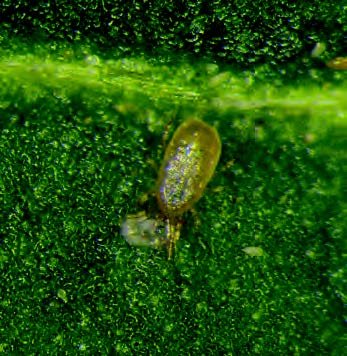
In a strong IPM program, beneficial insects, predatory mites and microbial products do much of the work, while chemical sprays are used sparingly and only when needed.
The shift is simple but powerful: move from routine spraying to actively monitoring and responding to what is happening in the crop.
Done well, this can deliver consistent, year-round control.
IPM is not a set-and-forget approach.
It requires active management.
Growers need to monitor pest and beneficial populations, adjust release timing, and sometimes introduce beneficials in stages to suit pest lifecycles, predator behaviour, and seasonal conditions.
Timing is especially important in tree crops.
Effective IPM relies on early detection, regular monitoring, and introducing the right beneficials at the right time.
Preventative releases can make a big difference. By establishing beneficial populations early, growers improve their chances of having natural predators already active when pest pressure builds.
“Orchards need a long-term program built around the crop,” Biological Services director James Altmann says.
“This may need adjustment depending on the season and what is happening in the block,” he says.
“The aim is to look after any naturally occurring beneficial organisms and establish any key beneficials for the major pests that might be deficient.
“This should be conducted ahead of peak pest pressure, then keep monitoring and adjusting.
“With the right timing, release strategy and support tools like pheromone disruption, trapping and compatible sprays, biological control can work very well in commercial orchards.”
Technology is also making IPM more practical.
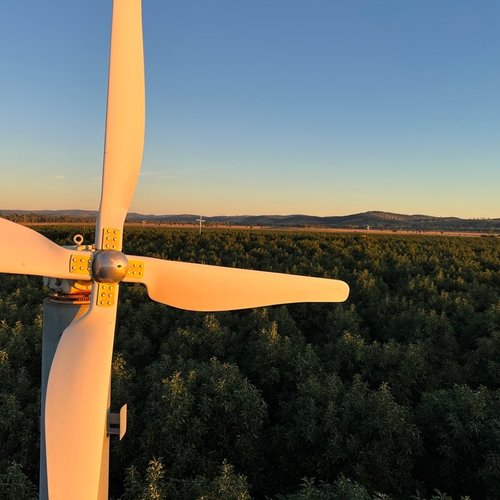
Drones and automated release systems are improving how beneficial insects are distributed across larger farms, making biological control easier to adopt at scale.
The benefits extend beyond pest control.
Reducing sprays can lower labour, fuel and chemical costs, while minimising disruption around harvest and withholding periods.
It also protects naturally occurring beneficial insects, reduces chemical exposure for workers, and supports the wider environment.
Biological Services has worked in tree crops since 1971, when red scale outbreaks threatened the citrus industry.
The company began rearing Aphytis melinus, becoming Australia’s first commercial insectary.
Today, Biological Services produces 30 species of beneficial insects and mites across three Australian insectaries.
With decades of experience managing pests like thrips, mites, aphids and whiteflies, the team helps growers monitor crops, identify issues, and build IPM programs that adapt to changing conditions.

