

Know your pest
Ion Staunton is an entomologist at Pestech.com.au, manufacturers of PyBo Natural Pyrethrum Insecticidal Concentrate. Ask your Ag supplier or talk to a human: 1800 12345 7
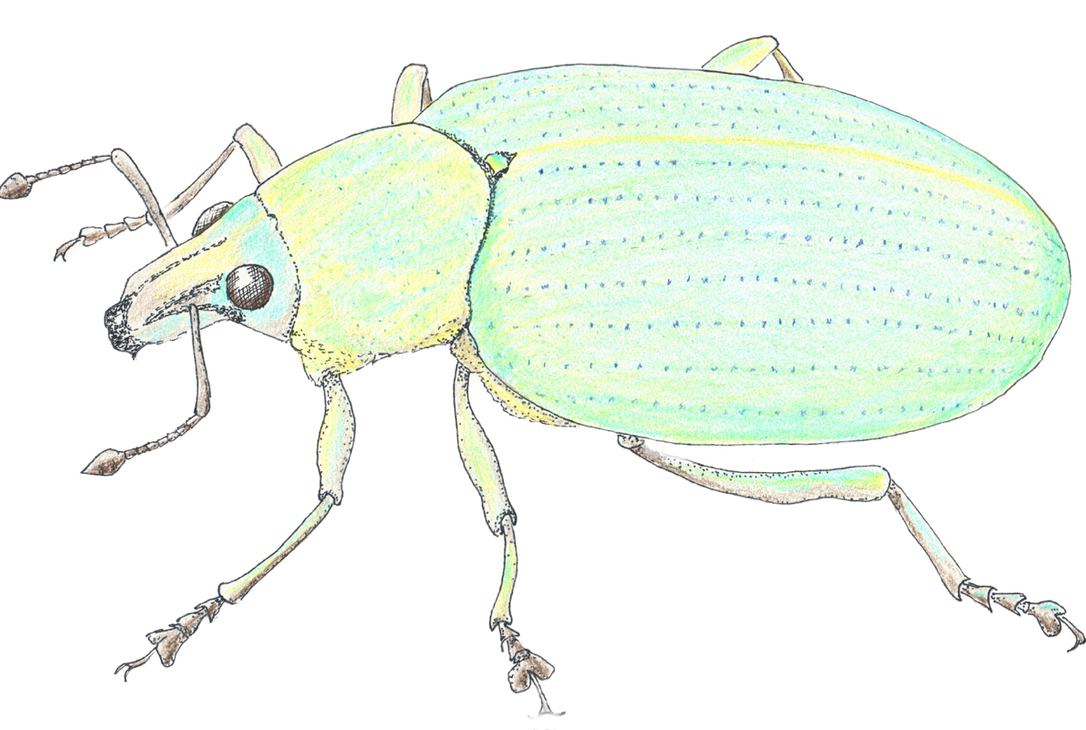
Weevils are a family of beetles, easy to identify – just check out the drawings.
The adult has a nose or proboscis; the compound eyes are at the top of the proboscis and the antennae, sticking out each side just below the eyes have an elbow and a few larger segments forming a terminal club.
The mandibles are at the end of the snout.
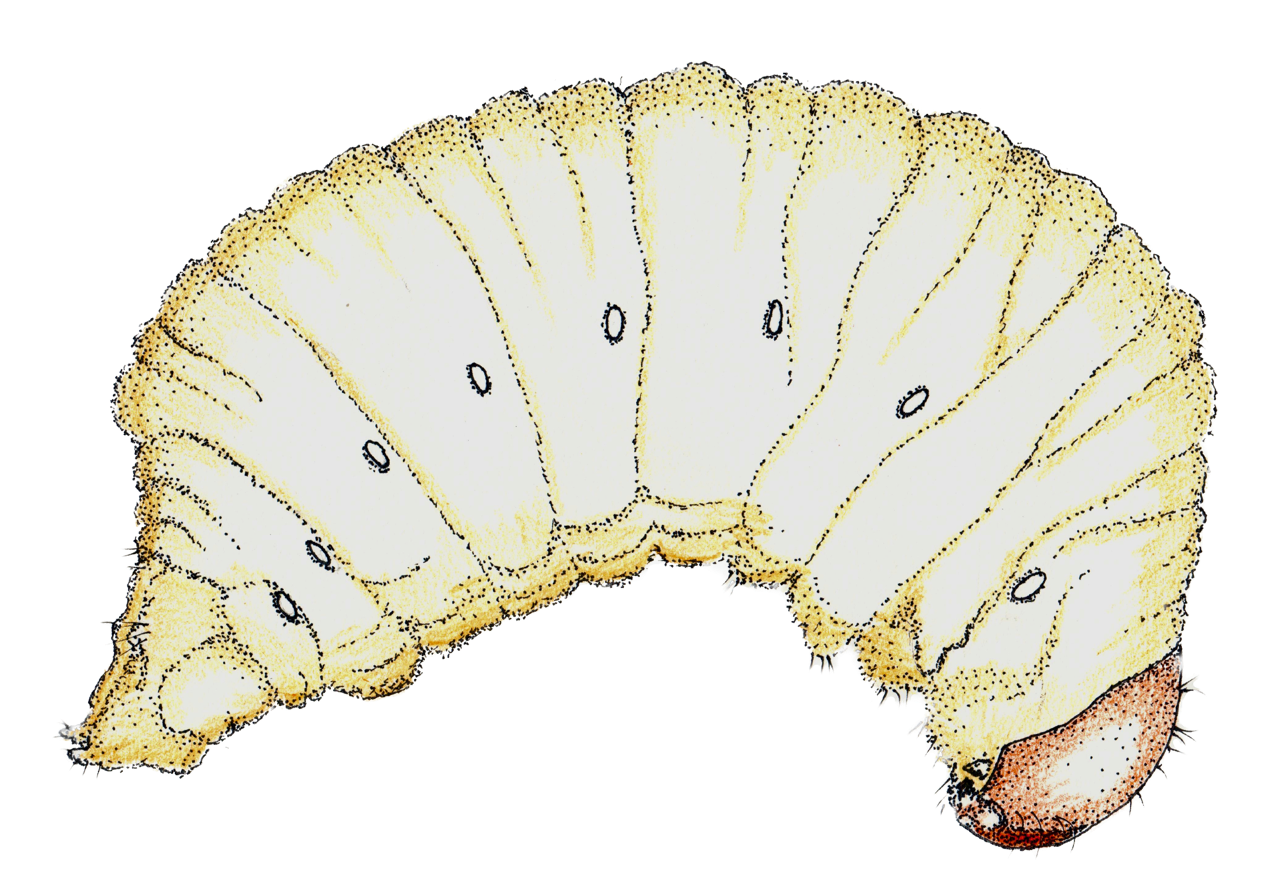
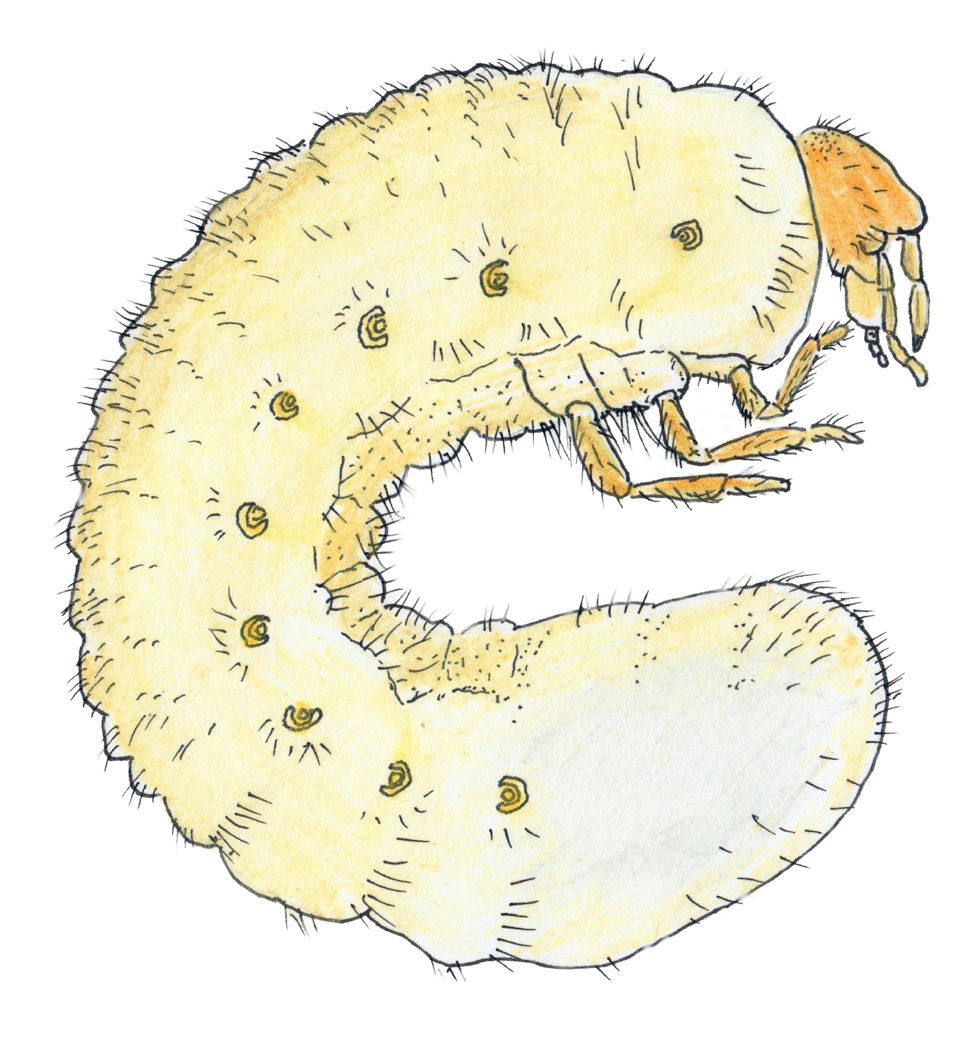
The larva is a legless grub usually found in the root zone and may look a bit like the six-legged scarab beetle curl grubs, but when you find one legless (without grog) it’s a weevil larva… there’s another drawing.
There are dozens of weevil species attacking many crops, including trees.
Many pest species get different common names based on the chosen, or available, crop. For instance, vine weevils also attack plants other than grape vines, including weeds and other vegetation beneath and beside your crop and may then called garden or leaf weevils.
There is a mango seed weevil, and it lays an egg on a young fruit.
The hatching larva bores directly into the seed while tiny; the skin and flesh repair without indication of the destruction going on in the seed.
Grow citrus?
You also have a leaf eating weevil making typical notches around the leaves. And a citrus root weevil; different because not only because of its feeding site but because the larvae eat the roots – an attack from above and below ground level.
How about apples or pears?
Your job is to look out for elephant weevils (a common name for a snouted/trunked weevil) and the Fullers rose weevil which doesn’t stick to eating roses.
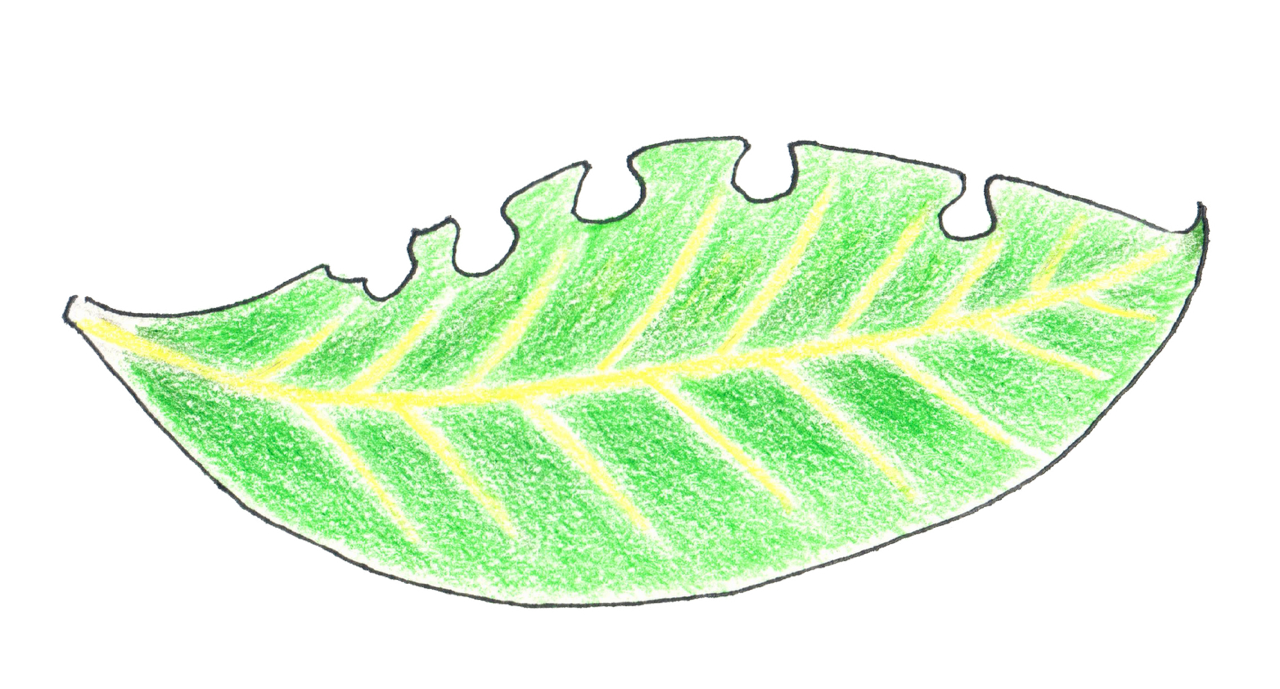
Again, notched/scalloped leaves are the common indicator.
Weevil damage of leaves is fairly typical.
Adults usually hide in the mulch or lower bark and move upwards as soon as the sun goes down.
When they get to the leaves, with a set of legs each side of a leaf, they begin munching on the edge as far down as their snout goes, then they walk forward and do it again.
The result is a scalloping around the margin of the leaves.
Weevils are often listed as minor pests. In the big scheme of things that is relatively true, but if the weevils are attacking your tree crop, you should know enough about them to control them.
Adult sizes vary from about 5-7mm for the various leaf/vine/garden/etc weevils, 10mm for the mango seed weevil, or 12-15mm for the banana weevil. Larva sizes vary in relationship to the adult size.
The length of their life cycles also vary, but that is also a factor of climate; in the tropics there is no winter (compared to Tassie and the SE State’s highlands) but winter in the tropics is the dry and as most weevil larvae eat in the soil, the lessened soil moisture can have an effect.
Weevil eggs are generally laid in small batches in leaf litter or debris under the host plant, (or singly on banana corms) on the actual roots of trees.
A week or so later, depending on climate and season, they hatch and begin feeding on living roots. The larvae have chewing mouth parts and, without legs, their locomotion is by wriggling.
Larvae go through many moults. The pupal stage in insects is always an event of enormous change. The legless eating-machine weevil grub, during this three to 10-week stage, finally pupates and withdraws inside its larval skin and rebuilds itself with legs, wings, eyes, antennae, reproductive organs and a digestive system more attuned to eating green leaves with a new set of dentures.
Their evolution is wasting a lot of time continuing to build wings they hardly, if ever, use to fly – however the hard forewing does give armour-like protection.
If you disturb weevils feeding up in the foliage, they just drop off; there’s no attempt to open and flutter their wings as they pinball to earth then pretend they are dead with their legs tucked up in their version of our foetal position.
Maybe they really are stunned. After all, a fall of 1.5m for a 10mm weevil is 150 times its body length; how would we be feeling after falling 225 metres?
Control
It usually takes many years for a weevil problem to become significant.
The action usually begins around the margins of your crop. Your first sign will probably be noticing the notched leaves.
It’s unlikely you’ll see the adult weevil unless you go out at night, they hide in loose bark, crevices at branch junctions, bunched fruit, or most often in the soil/mulch at the base of your trees during the day.
Because they walk rather than fly, the spread is slow. If the branches of your trees don’t intermingle, they can move from tree to tree by walking.
Cultivation, burning or in other ways reducing the amount of stubble can also disturb or eliminate their habitat and reduce their numbers. Cultivation can, of course, drag larvae and eggs in the mulch and leaf litter further into your crop so residual soil insecticides are worth your evaluation.
Your insecticidal options are similar to most insect pests: the instant-kill contact sprays will need to be applied in the evenings (the later the better, to give them time to get from soil to well up in the tree).
Because they are feeding on the edges of the leaves, they will be easily hit with a droplet.
Systemic insecticides which translocate through the sap stream will do the job providing you are not getting close to the withholding period deadline.
Application of residual pesticides to the soil is effective.
Beneficial wasps are sleeping while the weevils are moonlighting; parasitic nematodes may attack the larvae.

