
Tree crop insights
By Andrea Giovannini PhD in Agricultural, Environmental and Food Science and Technology – Arboriculture and Fruitculture, University of Bologna
Sweet cherry productivity depends heavily on the efficiency of insect-mediated pollination, especially in modern orchards characterised by self-incompatible cultivars requiring the transfer of compatible pollen between different varieties.
A recent study conducted in 16 conventional sweet cherry orchards in central Chile investigated the role of the main floral visitors by analysing their foraging behaviour through a high-resolution video monitoring system.
The objective was to identify which insect groups possess traits that genuinely favour pollen transfer and, consequently, effective flower fertilisation.
During the observations, more than 3000 floral visits were recorded.
Hymenoptera represented the dominant group, accounting for 65 per cent of total visits, almost entirely attributable to the honeybee (Apis mellifera), while wild bees played only a marginal role.
Diptera accounted for about one-third of the visits, mainly due to the high abundance of Bibionidae belonging to the genus Dilophus and several hoverfly species.
Beetles and Lepidoptera, on the other hand, were poorly represented.
Behavioural differences
The study revealed clear behavioural differences among the various insect groups.
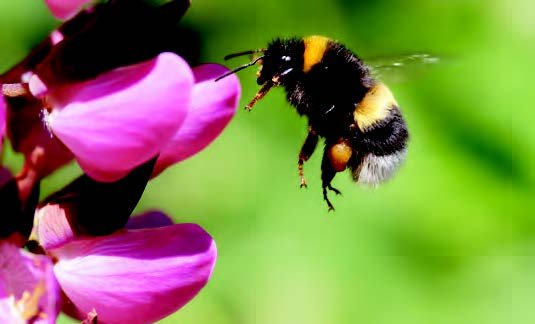
Bees exhibited the traits most favourable for pollination: very short visits to individual flowers, frequent movement between flowers, and regular direct contact with the stigma.
These characteristics are considered particularly important in self-incompatible systems, where successful fruit set depends on the insect’s ability to rapidly transfer pollen between flowers of different cultivars.
Bumblebees and honeybees, in particular, showed stigma-contact rates exceeding 90 per cent.
In contrast, many dipterans and beetles displayed less efficient pollination behaviour.
Bibionidae, despite their high abundance, remained on the same flower for long periods and rarely came into contact with the reproductive structures.
Small beetles also showed extremely limited movement, often remaining within the same inflorescence for several minutes.
This behaviour reduces pollen dispersal and limits the likelihood of cross-pollination.
Stigma contact
Hoverflies showed an intermediate pattern: although they spent less time on flowers than other dipterans, they contacted the stigma mainly with their legs, a mechanism considered less effective for pollen transport than direct body contact.
Insect body size also shows a positive relationship with the probability of stigma contact.
Larger insects, such as bumblebees, honeybees, and some large beetles, were much more likely to touch the flower’s reproductive structures during foraging.
In contrast, many small wild bees were able to feed without effectively contacting the stigma, thereby reducing their potential contribution to pollination.
The overall diversity of pollinators present in the conventional orchards studied was relatively low.
Compared with European and North American systems, the Chilean orchards showed a very limited presence of medium- and large-bodied wild bees, which are generally considered among the most efficient sweet cherry pollinators.
Pollinator biodiversity
Intensive orchard management and the limited availability of alternative habitats and floral resources likely penalised these species considerably.
Overall, the study confirms the mere abundance of floral visitors is not sufficient to ensure high-quality pollination.
Pollination effectiveness depends mainly on specific behavioural and morphological traits, including mobility between flowers, visitation speed, and frequency of stigma contact.
The findings therefore support the adoption of agronomic strategies aimed at increasing pollinator biodiversity, promoting the presence of wild bees, and reducing exclusive dependence on managed honeybee colonies, with potential benefits for both production stability and the ecological resilience of sweet cherry orchards.