
Products and services
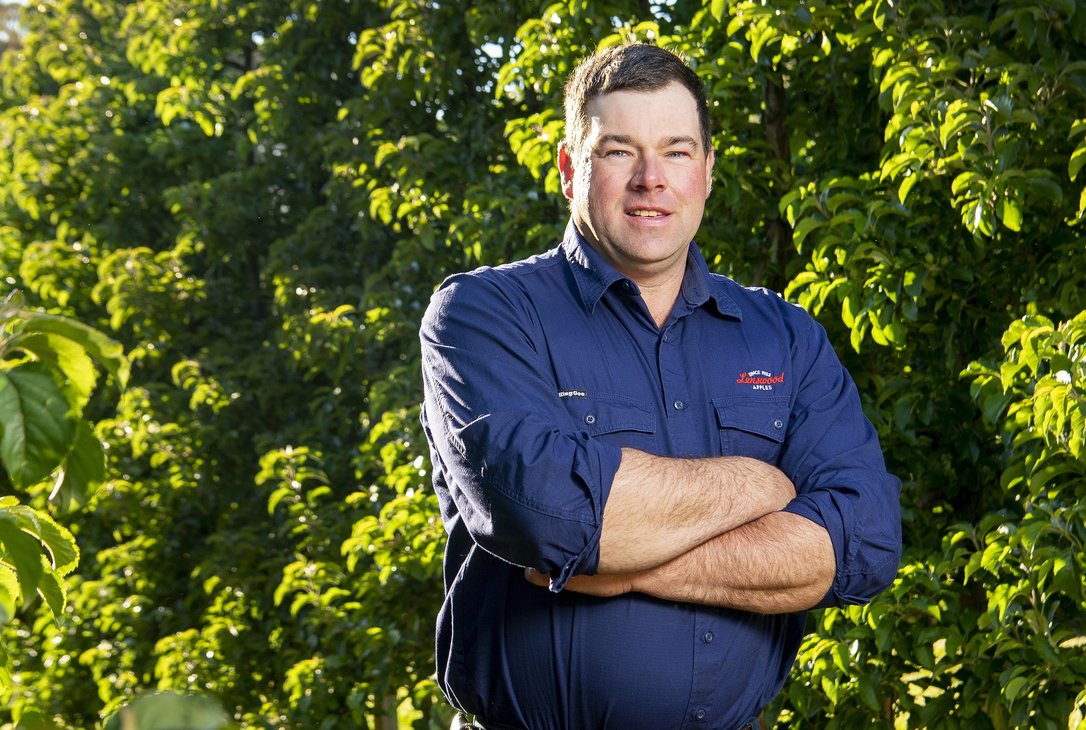
Managing harvest maturity and minimising fruit drop in a high-volume operation were the driving factors behind South Australian apple grower Noel Mason and partners decision to add near-harvest solution Harvista to AG and HC Mason’s orchard program about five years ago.
Mr Mason and his cousins Graham and Stephen combine more than a century of apple growing expertise and a forward-thinking approach to operate a 22-hectare multi-variety operation at Forest Range in the Adelaide Hills.
In its continuous quest for excellence, the business eagerly adopted Harvista to help it better manage harvest timing, schedule labour needs and meet quality benchmarks for national and export markets.
The orchard produces up to 4,800 bins from seven varieties during the harvest window spanning February-May. Last season it produced a record 5000 bins.
The business relies on maintaining a consistent supply of all varieties nationally over 10-12 months through controlled atmosphere (CA) storage at co-operatives in the Adelaide Hills and Lenswood.
A small volume of one variety is exported to Asian markets where it must meet stringent specifications.
“We’ve been using Harvista on four key varieties since it was introduced to Australia, after seeing a demonstration in a nearby orchard.
“We were happy with what we saw and were lucky enough to get access to a limited supply to try. We saw a difference, and after that, it was more readily available,” Mr Mason said.
The sixth-generation grower, whose expertise was recognised when he was named the 2024 Apple and Pear Industry Grower of the Year, said the operation adopted Harvista to address two critical challenges – fruit drop in Jazz and Bravo varieties and harvest maturity in Gala and Pink Lady varieties.
“The biggest benefits are being able to mitigate the risk of fruit drop and to manage harvest maturity to achieve better quality, firmness, colour and size,” Mr Mason said.
“Jazz and Bravo are highly susceptible to fruit-drop with the potential to lose up to 30 per cent of the Jazz crop and 15-20 per cent of the (export) Bravo crop without intervention.
“This generally happens two to three weeks before harvest and can be brought on by various factors. Weather can trigger it, causing a disconnect of the stem, sometimes called caulking, and is largely an ethylene-related issue.
“We want fruit to remain on the tree so we can achieve the premium 72mm in size and 180g.”
Harvista’s proprietary formula targets ethylene receptors to prevent fruit from recognising it.
This mode of action gives growers control over the ripening process for better quality fruit, inside and out.
With at least two picks per variety at AG and HC Mason, the challenge lies in holding remaining fruit on the tree to achieve optimal colour without compromising firmness or allowing the fruit to over-ripen, especially when hot weather is imminent or recruiting pickers is a challenge.
“Harvista’s ability to manage and control fruit ripening while fruit is still on the tree,‘ puts the brakes on’ ripening, especially during multiple picks.
“At the second pick, we want colour, but we don’t want the apple to go on ripening. Being able to hold ripening, gives the apples a better chance to achieve optimal colour– as well as firmness and size,” Mr Mason said.
“Harvista helps us mitigate environmental and labour-related risks and get the best we can out of our apples. With the‘ stop-drop’ scenario, it pays for itself, as it aids profitability on high- risk crops which would otherwise be waste product. Although our export volumes are small, it also ensures availability of supply.
“Unlike some other chemistries, there’s a lso a flexibility in maturity management. This is a major advantage as it can be used close to, and even after my first harvest.
“One application per crop can be applied by itself or in a program with other pre-harvest products, via air blast. We try and use it once per variety per block.
“When you’re dealing with nature, there’s always some variables, but we’ve had a positive experience with Harvista.
“It’s consistently done the job it was intended to do and helped us produce a quality premium product. We wouldn’t be able to get by without it.”

