

Nuts
-
Featured Crop
Australia’s almond sector is entering a new era, as it begins large-scale orchard replanting to enable future growth and satisfy increasing local and global appetite for the popular nut, Rabobank says in a newly-released report.
In its Australian almond outlook: replanting for growth beyond 2030, RaboResearch says the Australian almond industry is entering a pivotal transition phase, with renewal of ageing orchards and expansion into new areas.
“The next five years will begin the first large-scale replanting cycle which (along with expansion into new regions) sets the foundation for long-term growth in the Australian almond industry,” the report says.
This could see total planted area of almonds in Australia lift between 5000ha and 10,000ha (the equivalent of 7 per cent to 15 per cent growth in total area) by 2030, it says.
Meanwhile, positive global demand for almonds – coupled with limited production growth in California, the world’s largest almond producer and Australia’s main export competitor – should contribute to an improving market outlook “offering opportunities for the Australian industry to grow its share of the global market”.
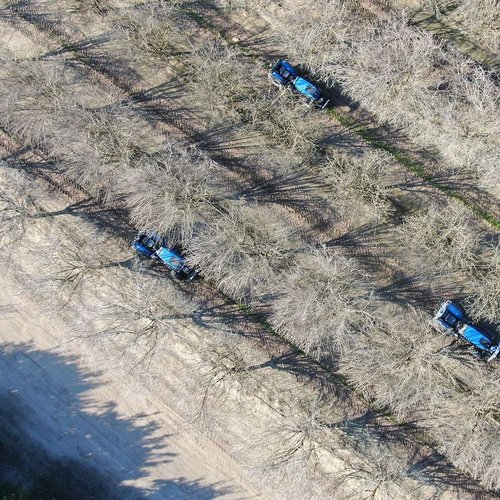
Report author, RaboResearch analyst Pia Piggott says the next five years will see the first large-scale replanting occur in Australia’s burgeoning almond industry, with many of the sector’s first-established 10,000ha of almond trees planted between 2001 to 2005 reaching the end of their productive life between now and 2030.
“This represents approximately 16 per cent of the total area of Australian almonds in 2024, which will require replanting in the next five years,” she says.
On top of this, some of an additional 13,000ha planted between 2006 and 2010 are also expected to need replanting in the coming five years as the productivity of older plants declines.
While the replanting effort may flatten production levels from now to 2030, longer term it should support further production growth for the industry, Pia says.
Added to this, there has also been a “step change” in new orchard developments after five years of declining yearly plantings, she says, with 2024 seeing 2634ha of new almond tree plantings, bringing total planted area in Australia to 66,095ha.
“And we expect to see further orchard developments as almonds will likely continue to be one of the highest-value use cases for water in the southern Murray Darling Basin,” she says.
While orchard expansion will likely occur at a slower rate than the previous wave of plantings (from 2016 to 2019), RaboResearch sees scope for total almond area in Australia to reach between 71,000ha and 76,000ha by 2030, “driven by land use change (from other commodities) and also by orchards developed outside traditional growing regions”.
“Cost of funding, land and water availability and drought risk will remain as key forces impacting the levels of orchard development,” it noted.
Based on today’s insights on planting and assuming good water availability, the report says, it is likely longer-term production volumes will further increase and “we expect Australian almond supply to reach 200,000 tonnes KWE (kernel weight equivalent) from 2030”.
The report notes Australian almond production in 2025 was down 4.6 per cent on the previous year to 155,697 tonnes KWE. However, this was still up 19 per cent on the five-year average, Pia says.
The 2026 Australian almond harvest is expected to be another good season in terms of both yields and prices, the report says.
“Better climatic conditions and improvements in prices should lead to margin improvement this year for the majority of growers,” Pia explains.
The almond market is entering its third consecutive year of average almond prices increasing she says, driven by the ‘normalisation’ of global stock levels, following record high levels reached in 2022.
Pia says the global stocks-to-use ratio of almonds in 2024 had fallen to the lowest level since 2019, “reinforcing the upward price trend and signalling tighter supply conditions”.
California remains the dominant supplier in the global almond industry, accounting for 77 per cent of world production and 83 per cent of global exports. Australia – a distant second in terms of global almond exporters – accounts for less than 10 per cent of world supply.
The report though says while US production is set to peak in 2026, production growth is then likely to “flatline”, as high development costs, along with groundwater regulation limiting availability, discourages new orchard development.
China is one of the largest market destinations for almonds, the report says, taking approximately 12 per cent of global imports in the past five years.
China/US tariffs imposed in 2025 have boosted Australia’s share of the Chinese almond market – which previously had been split approximately 50/50 between US and Australian origin product.
“This year the balance shifted, as retaliatory tariffs by China on US goods, including almonds, significantly boosted the competitiveness of Australian-origin almonds and boosted prices,” Pia says.
“These tariffs have supported revenue growth for Australian almond exports,” she says.
“In 2024/25, Australia exported 78.5 million kilograms (KWE) of almonds to China, worth more than $700 million – up 76 per cent in volume terms on the previous year and more than 100 per cent in terms of value.”
However, expanding Australian almond exports into other emerging markets will be essential to reduce export concentration risk and to capture incremental demand growth, the report cautions.
Outside China, Australian almond exports grew 8 per cent in 2024/25 compared with the previous year, largely driven by a 23 per cent increase in exports to India, Pia says.
“While export growth in India has been underpinned by reduced tariffs under the India-Australia Economic Cooperation and Trade Agreement, Australia’s international competitiveness has also been strengthened by a weaker Australian dollar in recent times,” she says.
The domestic market is also important for Australia’s almond sector, accounting for 15 per cent of sales in 2024.
However, in volume terms, it has remained stable over the past six years, with domestic sales ranging from 24,000 to 28,000 tonnes since 2019.
“With only approximately 40 per cent of Australian households purchasing almonds, there is still plenty of room to grow demand for the product in the domestic market,” Pia adds.
The global trend in shifting to more healthy eating is also a positive tailwind for almond demand, she says, with almonds offering high nutritional value and a good source of protein.

