

Business solutions & labour
-
Technology in agriculture
By Harsimran Singh, Mark G. O’Connell, Liqi Han and Alessio Scalisi
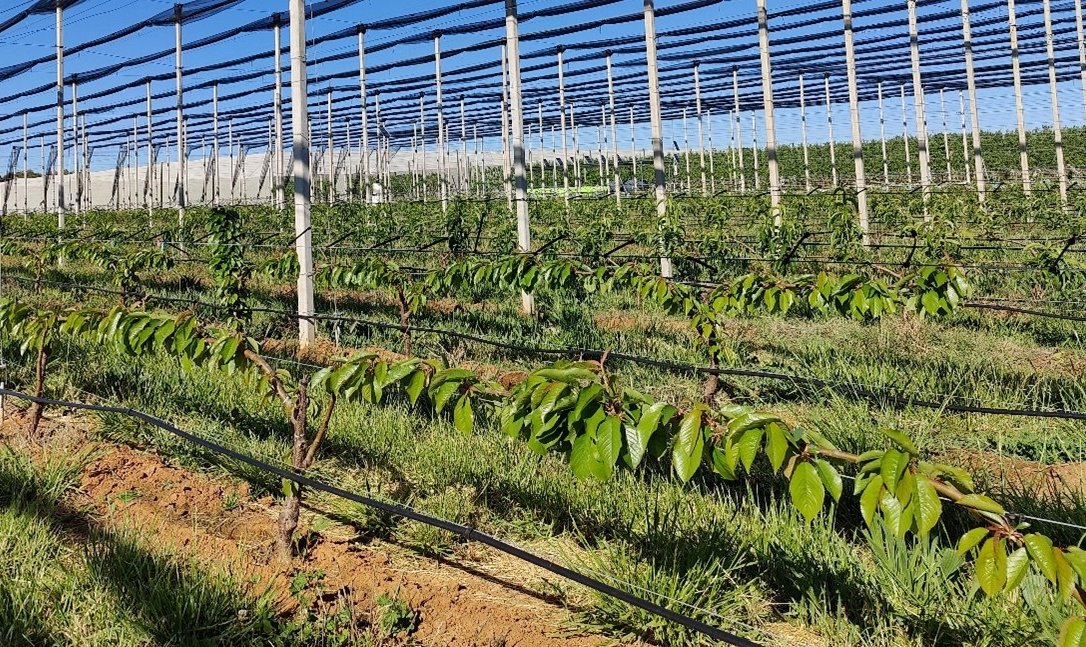
Narrow orchard systems (NOS) represent modern orchard designs focused on efficient utilisation of cropping area by developing two-dimensional multi-leader porous canopies in tightly spaced rows, which ultimately result in better fruit quality and yield, high operational and harvest efficiency, and enhanced crop monitoring and protection.
The adoption of Ag Tech and robotics are key components of NOS.
Agriculture Victoria is leading a national project on Narrow orchard systems for future climates and is evaluating the production performance of narrow row 2D orchards at the Tatura SmartFarm .
An orchard comprising narrow rows of cherries, nectarines, plums, apples and pears was established in 2024.
Trees are spaced at 2m between and within rows.
The selection of suitable rootstocks is a key aspect for the success of these orchards, as the fruiting and vegetative habit of some genotypes may have unfavourable features such as low or excessive vigour, or tip-bearing fruiting mechanisms.
Modern technology is unlocking new opportunities to objectively capture large datasets on tree growth, productivity, and performance – the Tatura SmartFarm is at the forefront of putting these innovations to the test.
LiDAR (short for Light Detection and Ranging) technology is being utilised by Agriculture Victoria and The University of Queensland in the NOS experimental site for evaluating orchard performance.
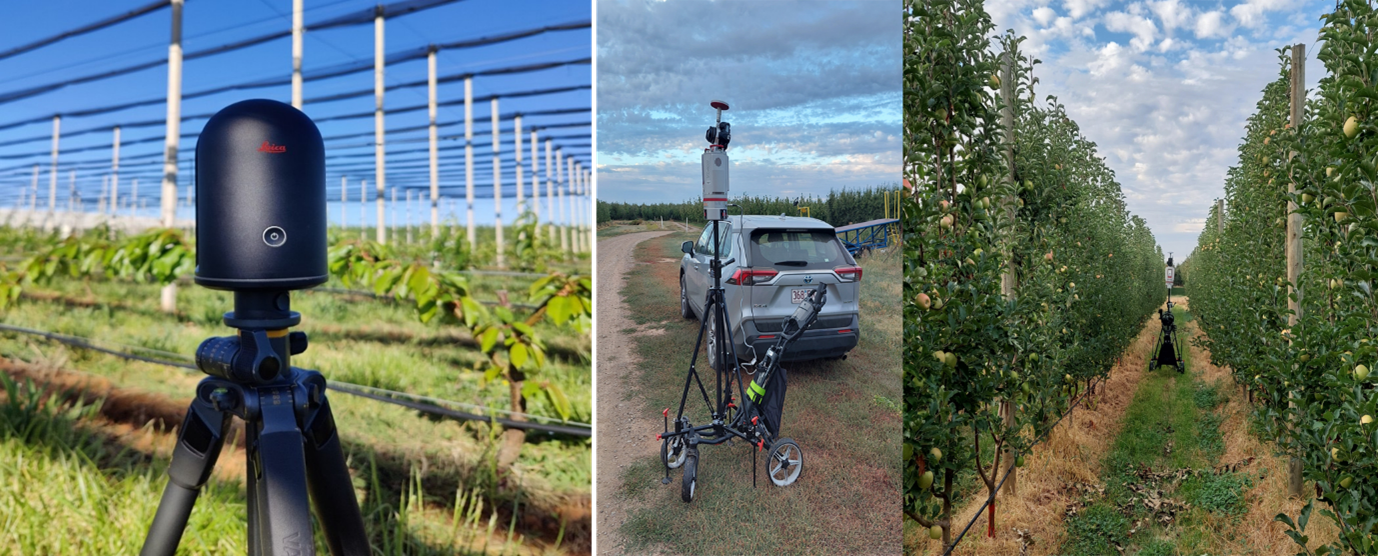
A LiDAR system can emit millions of laser pulses per second to scan surrounding objects and measures the time taken by the pulses to bounce back.
A high-fidelity LiDAR scanner can generate a detailed 3D dataset known as a point cloud, representing the surfaces the pulses encounter – in our case, leaves, branches, flowers or fruits within an orchard.
What once required ladders, tape measures, and hours of labour can now be captured in minutes, with centimetre-level accuracy.
Over time, LiDAR data can measure tree responses to specific inputs (e.g., application of plant growth regulators), scion and rootstock growth habits, flowering patterns and yield formation.
In the future as the utility of LiDAR technology advances, it could serve as a tool for decision-support processes in narrow orchards.
Another smart imaging device named ‘Trackview’ was developed and installed at the Tatura NOS experimental site as part of a collaboration with visiting PhD student Mirko Piani (University of Bologna, Italy).
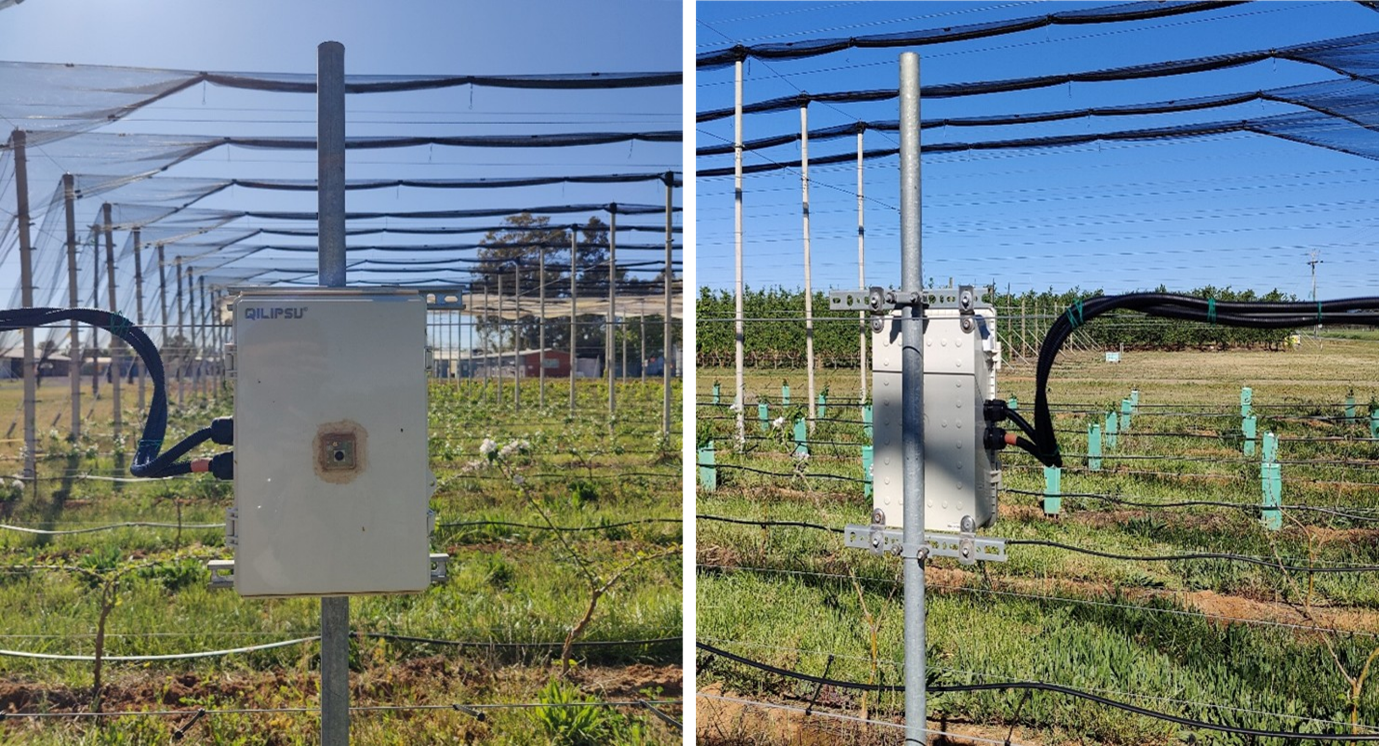
This solar-powered RGB camera is programmed to capture daily images of the tree and automatically upload them to the cloud for viewing and processing.
This system is designed to function efficiently even under minimal or no sunlight for two or more consecutive days.
When combined with AI-driven recognition models, Trackview images can serve as a valuable tool for orchard monitoring.
For instance, facilitating optimisation of spraying schedules for flower or fruit thinning and early detection of pest or disease incidence.
RGB cameras currently offer a more affordable and easier-to-automate option for characterising tree agronomic and productive performance compared to LiDAR.
By reducing the need for manual monitoring, Trackview has the potential to enhance both efficiency and economic performance across NOS.
Research collaborators in this initiative, funded by Hort Innovation Frontiers, are working on integrating smart tools including imaging technology in their NOS sites.
Complementary investigations focus on developing and testing autonomous machinery (e.g., canopy and weed sprayers, platforms, mowers), sensor driven irrigation systems, data integration into a single user dashboard, a field fruit sorter, and labour tracking software.
NOS allow growers to exercise greater control over automation, crop protection and labour management by developing structured, planar canopies that enhance mechanisation and improve work safety. Growers and industry professionals are invited to visit Tatura SmartFarm’s NOS sites and share their perspectives on this evolving orchard concept.
Acknowledgments
The project ‘Narrow Orchard Systems for Future Climates’ is funded through Hort Innovation Frontiers with co-investment from Agriculture Victoria, NSW Department of Primary Industries and Regional Development, South Australian Research and Development Institute, Department of Primary Industries and Regional Development WA, The University of Queensland, New Zealand Institute for Bioeconomy Science Limited and contributions from the Australian Government.
Details from harry.singh@agricuture.vic.gov.au

