

Tree crop insights
By John Lopresti and Glenn Hale, postharvest specialists at Fruitful Insights
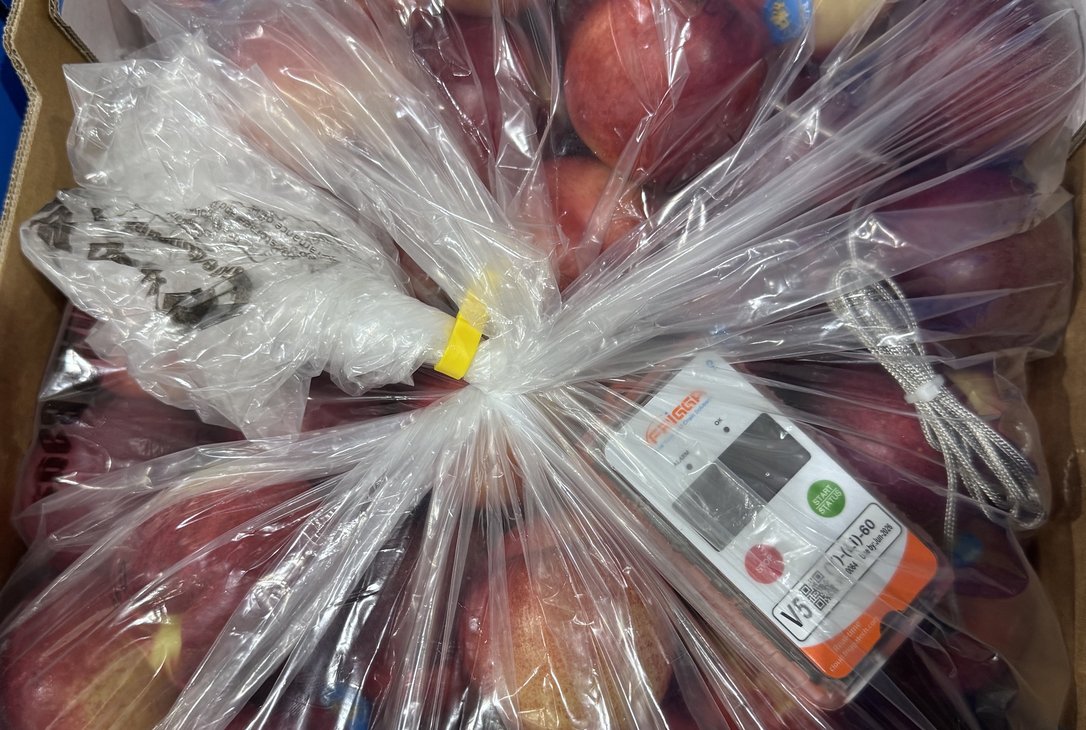
For Australian stone fruit growers and exporters, modified atmosphere packaging (MAP) is more than just a plastic bag.
It is a way of slowing down the biological clock of fruit during storage and transport
This is particularly important as the industry looks to extend sea-freight opportunities and reach more distant markets whilst maintaining stone fruit firmness, flavour and marketable quality.
Stone fruits such as peaches, plums and nectarines remain biologically active even after harvest.
They continue to respire, consuming oxygen (O 2 ) and producing carbon dioxide (CO 2 ), water and heat. They also produce ethylene (C 2 H 2 ), a natural plant hormone that drives ripening.
As ripening progresses, cell-wall structure changes, fruit softens, acidity declines and flavours develop.
MAP works by controlling the environment in which these processes occur.
Once fruit are harvested, cooled, packed and sealed inside an appropriate MAP liner, O 2 quickly decreases and CO 2 increases.
At the same time, gases such as O 2, CO 2 and C 2 H 4 move through the packaging film.
The final atmosphere is therefore a balance between the fruit's respiration rate and the film's permeability to O 2 and CO 2.
Commercial stone-fruit MAP systems can reach an equilibrium within the first week from packing, although the actual final atmosphere depends on cultivar, fruit maturity, temperature, package size and film characteristics.
This change in atmosphere can slow respiration and ethylene-related ripening, reducing the rate at which fruits lose firmness and other quality attributes.
Previous research by the authors on peaches and nectarines has demonstrated reduced softening, lower weight loss and better retention of quality during storage under suitable MAP conditions.
Similar benefits have been reported in plums, where MAP delayed colour change, softening and acidity loss.
For exporters, another important benefit is reduced water loss.
The high-humidity environment inside a sealed liner can substantially reduce fruit dehydration and weight loss which is particularly valuable during long sea-freight journeys of up to 40 days.
Maintaining fruit weight, firmness and appearance through the supply chain can mean more fruit arriving in premium condition.
However, MAP is not simply a case of “lower oxygen is better”.
If O 2 remains too low or CO 2 remains too high, fruit can switch over to anaerobic metabolism and produce off flavours due to ethanol and acetaldehyde production which are only apparent when opening the MAP or when tasting the fruit.
Therefore, the optimum atmosphere needs to be matched to the cultivar, fruit maturity at harvest, storage temperature and expected shipping duration.
MAP may also help reduce some chilling-related disorders, including flesh browning and woolliness, although responses vary considerably between cultivars.
Genetics, orchard conditions, harvest maturity and cold-chain management will also influence the final result.
Do you really know what your MAP is doing and is the liner you are using the best one for your supply chain and market?
Or is it the case you negotiated the best deal at the time and/ or purchased the cheapest liner on the market?
If you are unsure how your MAP is performing or would like to know the actual O 2 and CO 2 concentrations inside the liners you are currently using either domestically or overseas, contact Fruitful Insights.
We can help you understand how effectively your current liner is performing and confirm whether it is the right MAP solution for you.
With many different liners now available, we can also assess alternative options that may better suit your fruit, supply chain and market requirements.

