
Tree crop insights
Dr Muneer Rehman, Agriculture Victoria
White peaches may look perfect at harvest, but they quickly lose value during storage and transport.
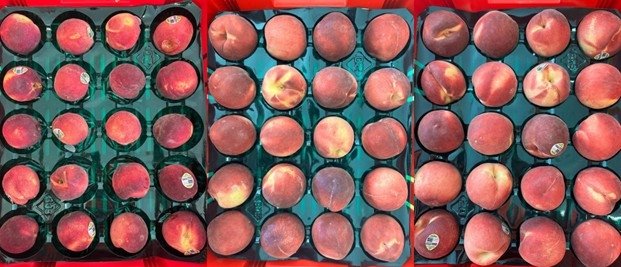
In this study at Agriculture Victoria’s Tatura SmartFarm, controlled-atmosphere (CA) and dynamic controlled-atmosphere (DCA) storage methods reduced dehydration from 24 per cent weight loss in air storage to 2-4 per cent, while keeping the fruit firmer for a longer period.
Why is the value lost after harvest
White peaches are highly sensitive to water loss and softening.
Even small losses of firmness and surface moisture can quickly reduce marketability, especially during long-distance transport and export-style handling.
The main drivers are:
- dehydration (weight loss), leading to shriveling and poorer presentation.
- softening, reducing consumer acceptability, and shelf-life.
- faster respiration and ripening under higher oxygen conditions.
- handling and temperature transitions during packing and transport.
What CA and DCA do
CA storage reduces oxygen levels and increases carbon dioxide in the cool room, slowing respiration and ripening.
DCA adjusts oxygen more precisely by responding to signals from the fruit about its oxygen needs, keeping oxygen levels low without stressing the fruit.
Results that matter at pack-out and on the shelf
To investigate whether controlled-atmosphere technologies better preserve fruit quality through storage and the subsequent shelf-life period, snow baby white peaches were used as the test fruit.
Fruit was stored under CA and DCA in airtight, sealed chambers (CA chamber volume: 1.07 m³; DCA chamber volume: 0.62 m³) to enable stable atmosphere control.
These treatments were benchmarked against a standard air (control) in a conventional cool room with an internal volume of 30.6 m³.
Quality was assessed at pack-out (post-cold storage) and again after three days at 16 °C (retail/shelf simulation), focusing on commercially relevant outcomes including firmness retention and weight loss (dehydration risk).
Weight loss (dehydration risk):
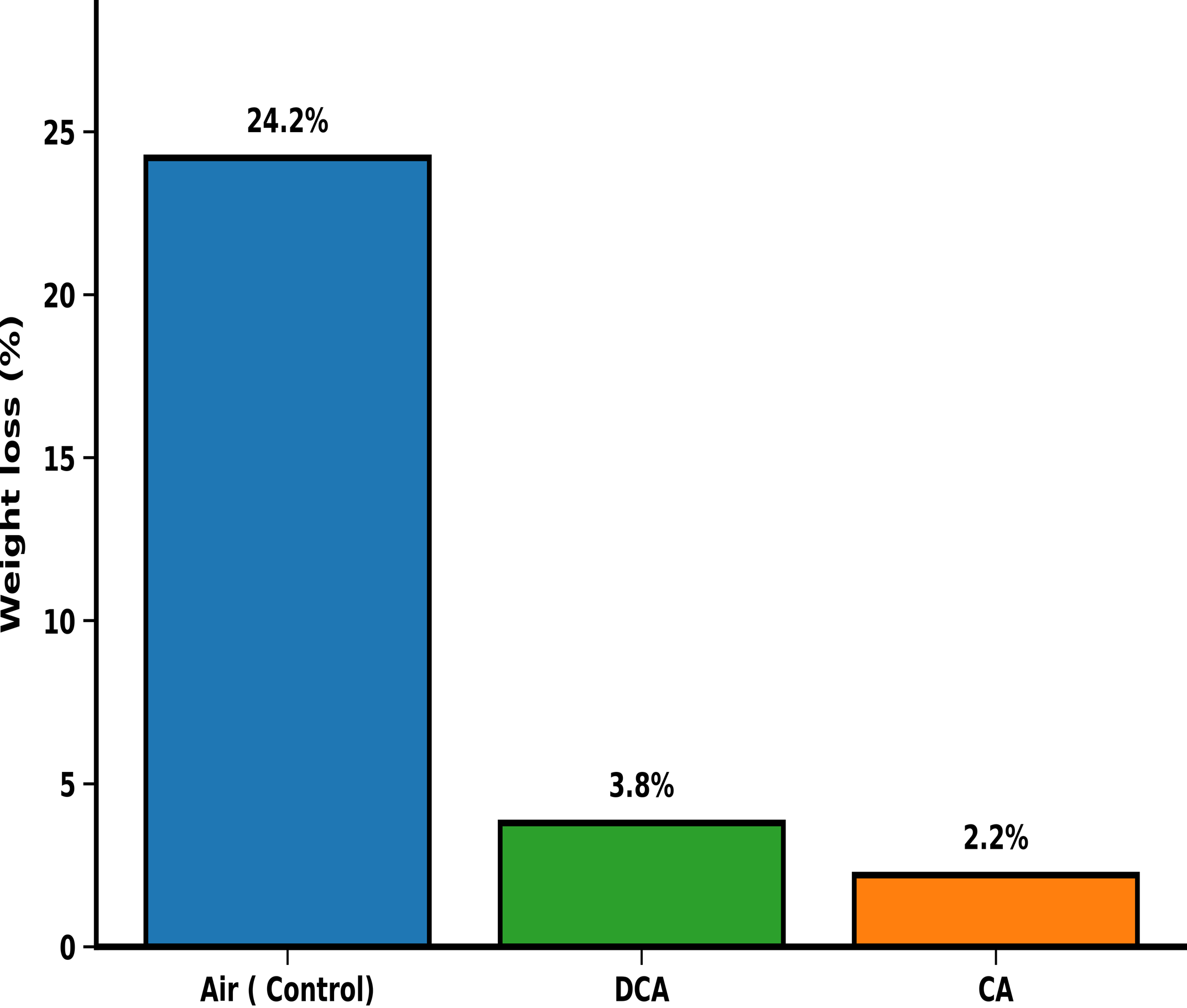
After storage, the control (i.e., air storage) showed very high weight loss (24.2 per cent) compared with DCA (3.8 per cent) and CA (2.2 per cent).
Relative to air storage, DCA reduced weight loss by 84 per cent, while CA reduced weight loss by 91 per cent.
In practical terms, CA and DCA markedly limited dehydration during storage, helping preserve fruit condition and reduce shrivel-related quality and marketability losses.
Firmness:
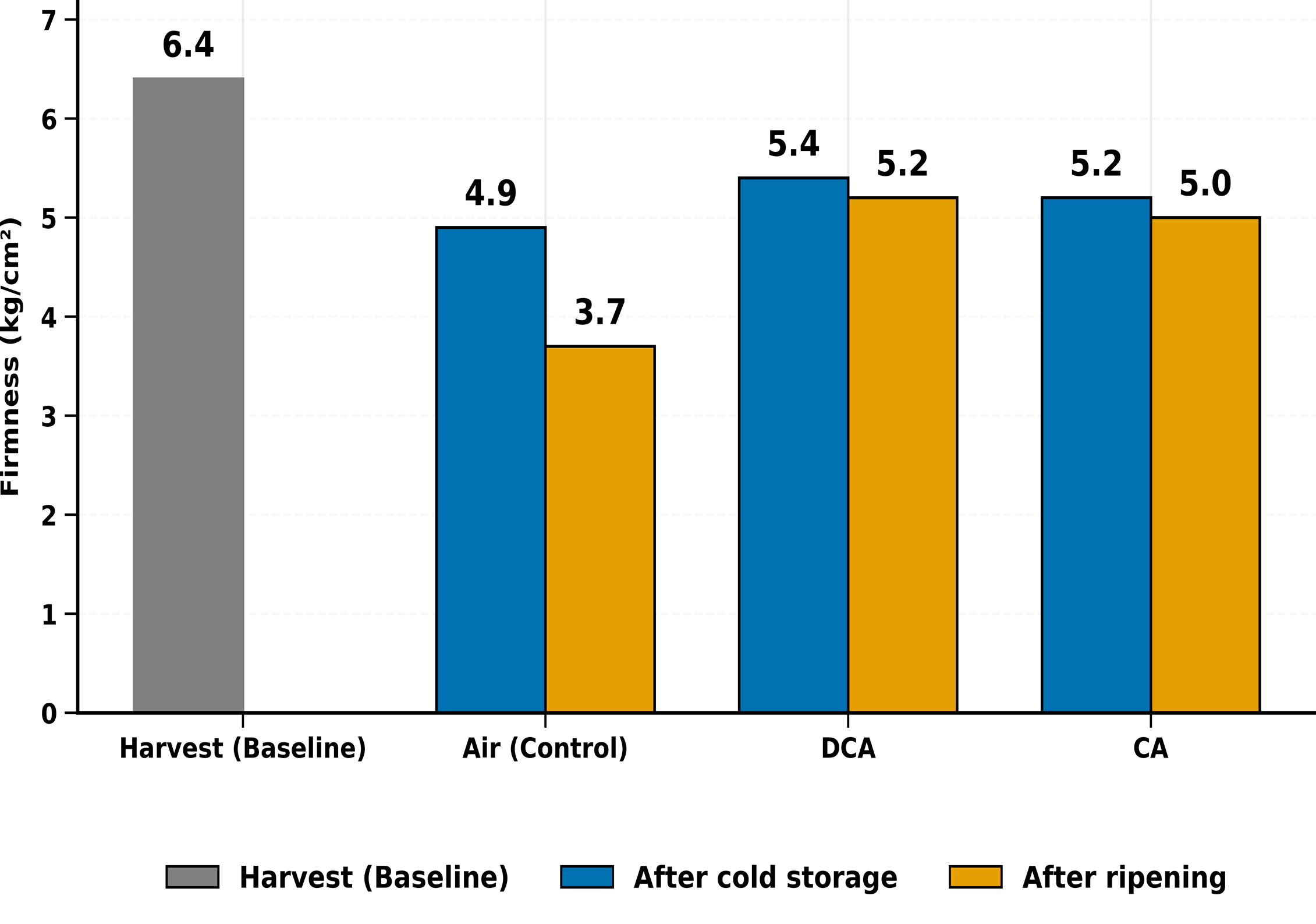
- after cold storage, DCA (5.4 kg/cm²) and CA (5.2 kg/cm²) retained higher firmness than air storage (4.9 kg/cm²).
- after three days at 16°C (ripening simulation), DCA (5.2 kg/cm²) and CA (5.0 kg/cm²) remained firmer than air storage (3.7 kg/cm²), representing a 1.3-1.5 kg/cm² firmness advantage.
- CA and DCA slowed softening and preserved substantially more firmness through the shelf-life phase.
Commercial so what for orchards and packhouses
Lower dehydration and increased firmness led to stronger pack-outs and fewer downgrades.
For growers and packhouses, CA and /or DCA can help reduce forced quick sales, enhance flexibility to target the best market window, and support longer shipping routes with less risk of shrivel-related claims.
What to do next
If you are handling white peaches for longer supply chains, speak with your storage provider about chamber settings, oxygen thresholds, and how the room is managed when fruit exits cold storage.
Review handling practices at unloading and packing to minimise temperature shocks and moisture loss during transitions.
Take-home message
CA and DCA storage cut weight loss by more than 80 per cent and kept fruit firmer for longer.
For growers and packhouses, that means less shrivel, stronger pack-outs, and more flexibility to pick the right market window.

